A customer writes to your business with a clear need. The next step should feel easy, relevant and respectful. Practical advice on tracking the metrics that drive real revenue on WhatsApp.
Quick answer
Measure WhatsApp marketing success through an end-to-end framework covering delivery rate, read rate, meaningful reply rate, conversion rate, and revenue attribution. Combine these commercial metrics with operational quality indicators, including First Response Time (FRT), resolution speed, and Meta's phone number quality rating.
Platform policy: WhatsApp requires opt-in before business messaging, requires businesses to honor opt-outs, and requires approved templates for Platform-initiated conversations outside the 24-hour customer service window. Automated responses must provide clear escalation paths. Read WhatsApp’s current Business Messaging Policy.
Key takeaways
-
Tracking response quality and opt-out rates is just as critical as measuring outbound open rates to prevent account reputation damage.
-
Write down the owner, trigger and stop condition for every automated step.
-
Make consent, policy and privacy part of the workflow design.
-
Review replies and outcomes, then improve one step at a time.
What does marketing metrics mean in practice?
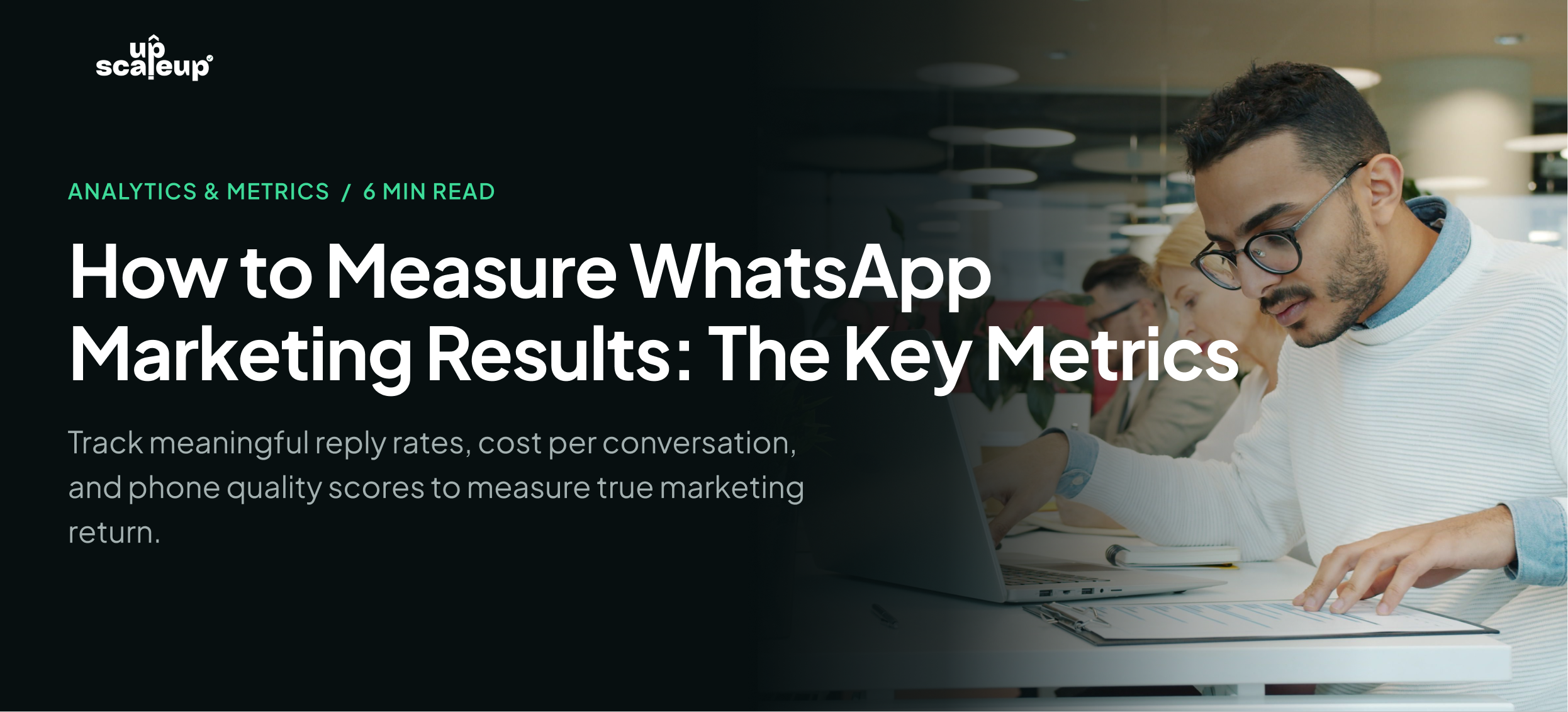
Measuring the performance of WhatsApp marketing requires moving beyond vanity numbers like simple message delivery counts. Because WhatsApp is an interactive two-way communication channel, true marketing effectiveness is reflected in whether recipients engage, ask clarifying questions, and proceed to complete commercial transactions. Establishing a clear measurement dashboard ensures data-driven optimization across every campaign.
The right design starts with the customer task, not the software menu. Ask what a person is trying to do, what information the business already has, and what should happen if the automated step cannot help. A short, predictable journey is easier to explain, maintain and improve than a complicated flow with many branches.
For WhatsApp, the channel rules matter. Business-initiated messages, templates, opt-in and quality requirements can change, so check the current official policy and platform documentation before launch. Keep a record of where permission came from and make it straightforward for a person to ask for help or stop messages.
How should a business plan the workflow?
Use this four-part operating plan before building:
|
Step |
Decision |
Example |
|---|---|---|
|
1. Purpose |
What customer task will this improve? |
Answer a common question or confirm an appointment. |
|
2. Permission |
Why may you contact this person here? |
Record the opt-in source and the requested update. |
|
3. Path |
What happens for normal, unclear and urgent replies? |
Offer choices, then hand off when confidence is low. |
|
4. Proof |
Which outcome shows the workflow helps? |
Resolved requests, qualified replies or attended appointments. |
Keep the first version narrow. Write the exact message, define who receives it, set the timing, identify the person or team who owns replies, and decide what event stops the sequence. Test with internal users and a small eligible audience before expanding.
A practical message template is: “Hi [name], you asked us about [specific need]. Here is [useful next step]. Reply [choice] if you would like help, or tell us if you would rather not receive these updates.” Adapt the wording to the actual purpose and platform requirements; do not send a generic message to people who did not ask for it.
Attribution modeling and phone number quality monitoring
Accurate revenue attribution requires tracking customer actions beyond the messaging thread. Implement unique coupon codes or UTM-tagged links in template buttons to track downstream website purchases in your analytics platform. For sales teams closing deals over chat, ensure your CRM logs WhatsApp-attributed revenue accurately upon deal closure.
Regularly inspect your Meta Business Manager dashboard to monitor your phone number quality rating. A rating that slips from Green to Yellow indicates rising user block or spam report rates, signaling an urgent need to refine audience segmentation, decrease message frequency, or improve template relevance before Meta throttles your messaging tier.
What mistakes should teams avoid?
-
Treating a phone number as permission to send any marketing message.
-
Automating an answer that requires judgement, diagnosis or account-specific verification.
-
Leaving replies in an unowned queue with no response-time expectation.
-
Sending repeated nudges without a useful reason or a clear stop condition.
-
Measuring sent messages while ignoring complaints, opt-outs and unresolved requests.
A named team member should review exceptions. That person needs enough context to continue the conversation without asking the customer to repeat everything. For teams using a platform, confirm how assignments, notes, labels and customer history are handled before relying on them operationally.
Example: A direct-to-consumer electronics brand optimizes campaign ROI
Hypothetical scenario: A consumer electronics brand evaluated WhatsApp campaigns purely by message delivery counts, celebrating a 98% delivery rate while sales revenue stagnated.
The brand deployed end-to-end attribution analytics on UpScaleUp.io. By implementing unique coupon codes for each broadcast segment and tagging CTA buttons with UTM parameters, the marketing team discovered that smaller VIP customer segments generated an 8.4% purchase conversion rate, while general database blasts produced a 0.2% conversion rate and high opt-out spikes. Reallocating budget to hyper-targeted segments quadrupled campaign ROI while restoring the phone number to a High (Green) quality rating.
How can you tell whether it is working?
Choose one primary outcome and a few diagnostic measures. For a service workflow, that might be completed requests, time to first human response and repeat contacts. For a campaign, examine delivery, meaningful replies and downstream actions. Define how you attribute an outcome and the time period before comparing campaigns.
Include quality measures alongside efficiency. A faster first response is not a win if customers cannot reach a person, receive an inaccurate answer or feel pressured. Read a sample of conversations and ask staff where the workflow creates extra work.
“A good automation makes the next step clearer for the customer.”“Every automated message needs an owner and an exit.”“Measure the customer outcome, not just the send count.”
Soft CTA: If you are evaluating a shared inbox, chatbot or follow-up workflow, compare the process you need with the actual features and current platform policies. UpScaleUp.io describes its WhatsApp tools and integrations on its site; confirm plan details and availability before choosing.
Conclusion
Start with one customer problem, a clear permission basis and an uncomplicated path to a person. Write the workflow down, test it with a small group, and measure whether it makes the customer’s next step easier. Then improve the process based on real conversations.
Explore the relevant UpScaleUp capability: UpScaleUp Campaign Analytics & Reporting.
Frequently asked questions
Quick answers related to this guide.
What is whatsapp marketing metrics?
Measuring WhatsApp marketing involves tracking key performance indicators such as message delivery rates, read rates, customer reply rates, conversion rates, and account quality scores.
How do I get started with whatsapp marketing metrics?
Start with one recurring customer need, map the current steps, confirm consent and policy requirements, then test a small workflow with a human owner and clear stop rules.
Do businesses need automation for every conversation?
No. Automate repeatable, low-risk steps. Keep a person available for complex decisions, complaints, sensitive questions and situations where context matters.
How should a team protect customer trust?
Explain why the business is messaging, use only relevant information, honour preferences and opt-outs, and avoid collecting details that are not needed.
Can a platform guarantee more sales or engagement?
No platform can guarantee those outcomes. Results depend on the audience, offer, timing, consent, service quality and how the business handles replies.